✨ The Autumn Issue: Vol. II is live. Grab your coffee and stay awhile.
BeautyThe Autumn Issue · 4 minute read

Sun spots, and the body care I stopped putting off

It happened in that unforgiving afternoon light. Sun spots on my legs, and the end of treating self-care like an afterthought. Here are the affordable body-care staples I reach for now.

It happened in that unforgiving afternoon light—the kind that cuts across the bedroom floor and refuses to flatter anyone.

I looked down at my legs, really looked at them for the first time in months, and froze. Scattered across my shins and thighs were faint, freckled clusters that definitely hadn’t been there a few summers ago. Sun spots. Age spots. Whatever polite name the beauty industry wants to give them, they were staring right back at me.

My initial reaction wasn’t poetic. It was an instant jolt of panic: When did this happen?

Getting older can feel jarring. As women, we spend decades running on fumes. We manage households, chase deadlines, care for everyone else, and rush through our days with barely enough time to slap on sunscreen before walking out the door. Our bodies carry the weight of all that motion, silently tallying every sun-drenched road trip, every rushed shower, and every year we put ourselves last.

Standing there looking at my skin, the initial sting gave way to something else: clarity.
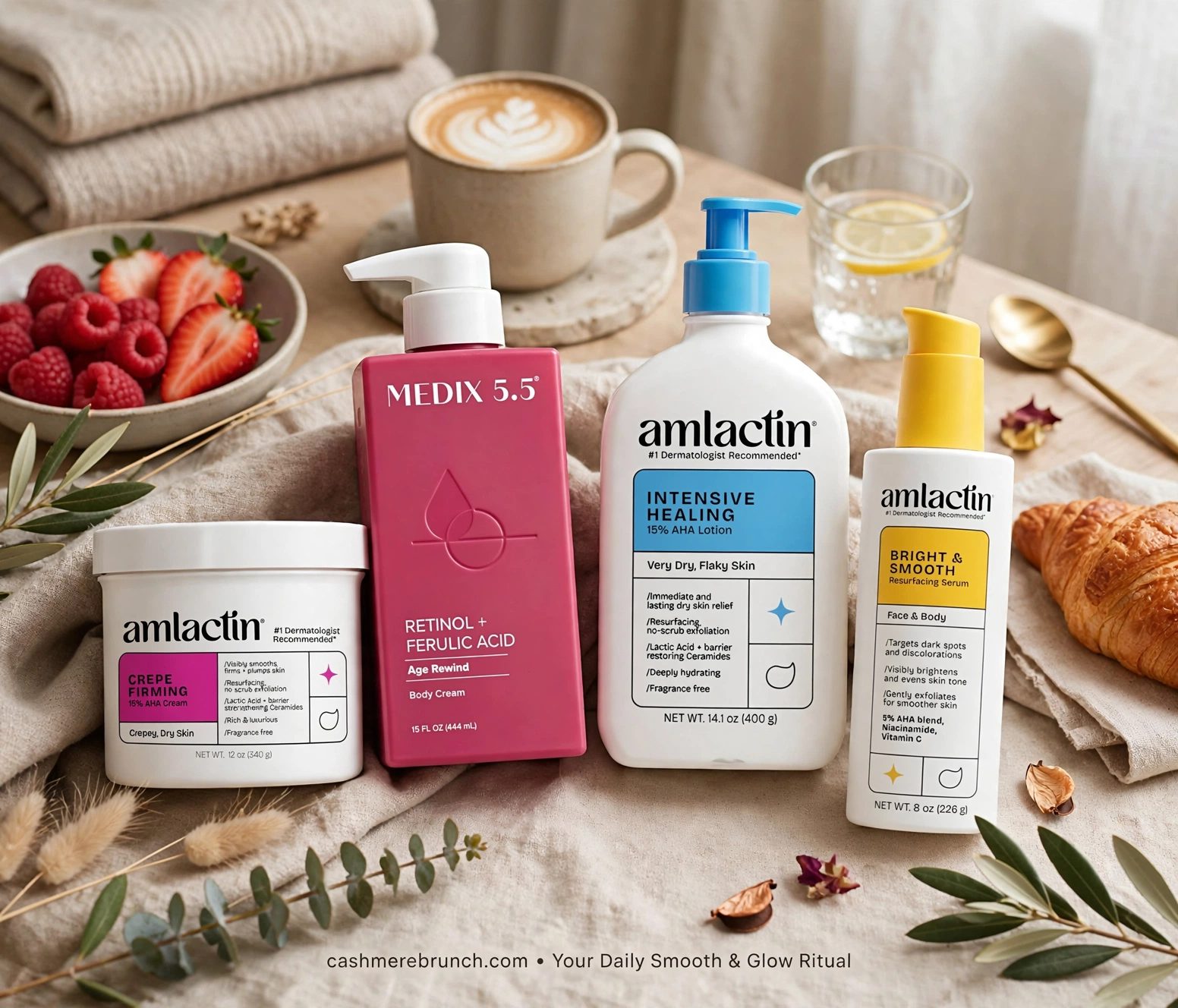
AmLactin Crepe Firming cream, MEDIX 5.5 Retinol + Ferulic Acid body cream, AmLactin Intensive Healing lotion and AmLactin Bright & Smooth serum on a linen tablecloth, beside a latte, a bowl of berries and a croissant.

Getting older is messy and emotional, but here is the bright side—I’m entirely done treating self-care like an afterthought or a guilty indulgence. If my twenties were about hustle and my thirties were about keeping every plate spinning, this era belongs to intentional care. Not trying to freeze time or chase an unrealistic 18-year-old complexion, but giving my skin the same effort and respect I’ve poured into everything else.

The most empowering part? You don’t need an expensive med-spa routine or painful treatments to actually see a difference. Active skincare isn’t just for your face anymore, and targeting hyperpigmentation, uneven tone, and dull texture has become completely accessible.

Body care for sun spots and crepey skin

A few hardworking, affordable staples that target tone and crepey texture without requiring a whole ordeal:
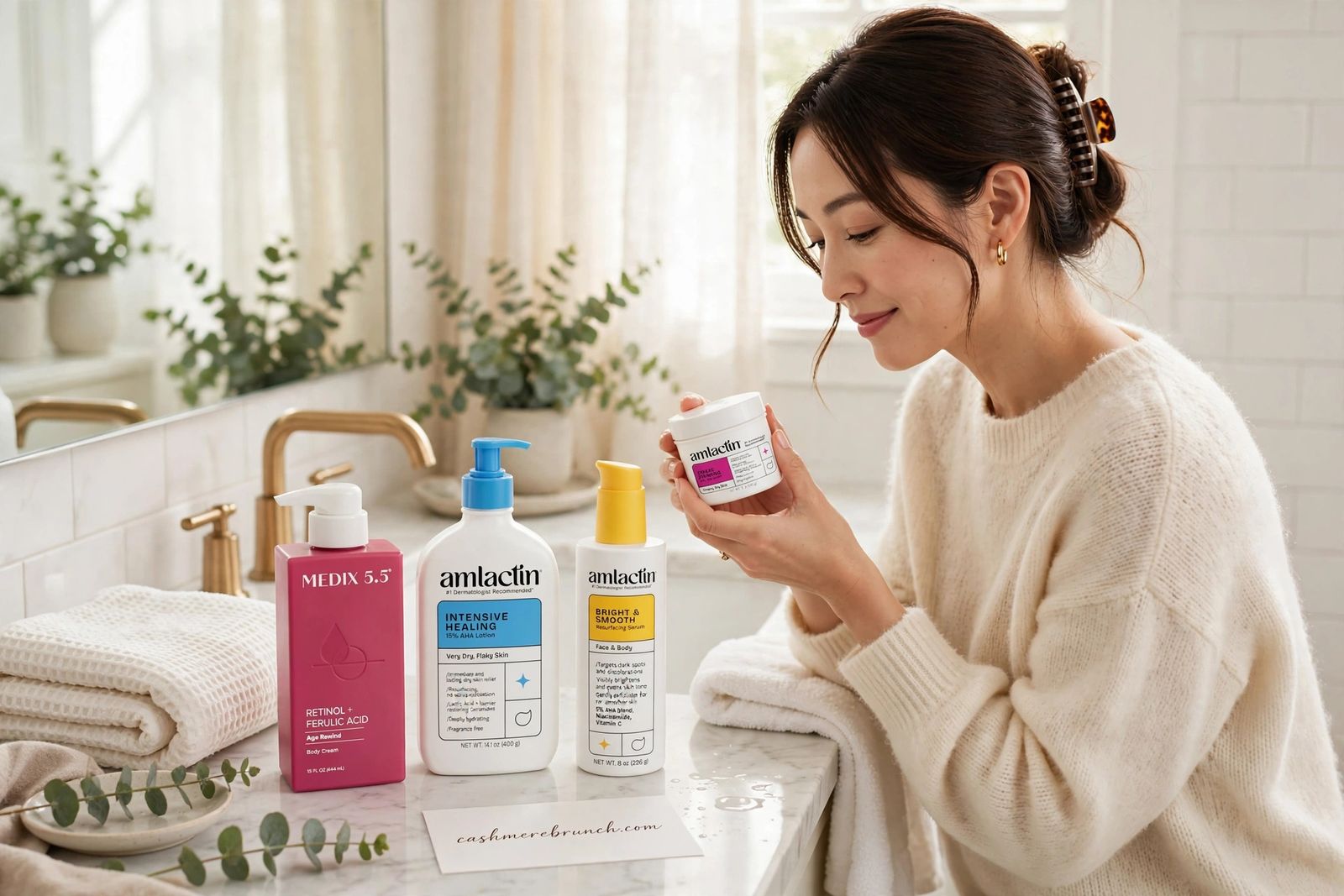
A woman in a cream sweater at a marble bathroom counter, holding a jar of AmLactin Crepe Firming cream, with MEDIX 5.5, AmLactin Intensive Healing and AmLactin Bright & Smooth lined up beside her.

Taking ten quiet minutes after a shower to smooth on an active lotion isn’t vain. It’s a grounding ritual. It’s an acknowledgment that our bodies have carried us through every single chapter so far, and they deserve real attention as we step into this one.

The spots might be reminders of time passing, but how I treat myself from here on out is entirely up to me.

Until next time—keep your coffee warm, your boundaries clear, and your standards high.

The short list

Everything linked in this story, plus two more for dry skin.

  1. 01

    MEDIX Fragrance-Free Firming Retinol Body Lotion + Collagen Peptides Cream Set

    Retinol lotion plus a collagen and peptides cream.

    View
  2. 02

    AmLactin Bright & Smooth Resurfacing Serum

    Lactic acid serum, face and body.

    View
  3. 03

    AmLactin Crepe Firming Body Cream, 15% Lactic Acid

    15% lactic acid cream, 12 oz.

    View
  4. 04

    MEDIX 5.5 Retinol Body Lotion Firming Moisturizer

    Retinol and ferulic acid body cream.

    View
  5. 05

    AmLactin Intensive Healing Body Lotion, 15% Lactic Acid

    15% lactic acid lotion, 14.1 oz.

    View
  6. 06

    AmLactin KP Bumps Be Gone Body Cream, 15% Lactic Acid

    15% lactic acid cream, 3 oz.

    View

As an Amazon Associate, Cashmere Brunch earns from qualifying purchases.

Questions people actually ask

Can a body lotion fade sun spots?

It can help with how uneven tone looks over time, but this page can't tell you what a spot is. A spot that is new, changing, itchy or bleeding should be seen by a doctor before you treat it as cosmetic. Nothing here is medical advice.

Can I use retinol and lactic acid together?

Plenty of people alternate them, one on some nights and the other on the rest, to keep irritation down. Start slowly, patch test, and follow the directions on each product. If your skin is sensitive, or you are pregnant or breastfeeding, ask a doctor before using retinol.

Do I still need sunscreen?

Yes, more than before. Retinol and acids can make skin more sensitive to the sun, and the sun is how the spots got there in the first place.

How long before I see a difference?

It varies, and nobody honest can promise a timeline. Think in weeks of steady use, not days, and check each product's own directions.

Do you earn from the links on this page?

Yes. We're an Amazon Associate and earn from qualifying purchases, at no extra cost to you.

On the shelf